
Why Portugal is becoming southern Europe's next data centre hub
Why Portugal is becoming southern Europe's next data centre hub
Stillness has texture. We shape comfort through the smallest details.
by
David Moura-George
min read
In recent years, Portugal has emerged as a key player in the global data centre market, positioning itself as Southern Europe’s next major hub for digital infrastructure. With its strategic location, robust connectivity, and commitment to renewable energy, the country is attracting significant investment from hyperscalers and international operators. Here’s why Portugal is gaining attention and how it is poised to lead Europe’s next infrastructure cycle.
The growing demand for Data Centres
The digital economy is expanding at an unprecedented rate, driven by the rise of cloud computing, artificial intelligence (AI), and the digitalisation of economies. These factors have led to explosive data growth, making data centres critical infrastructure for storing, processing, and moving data.
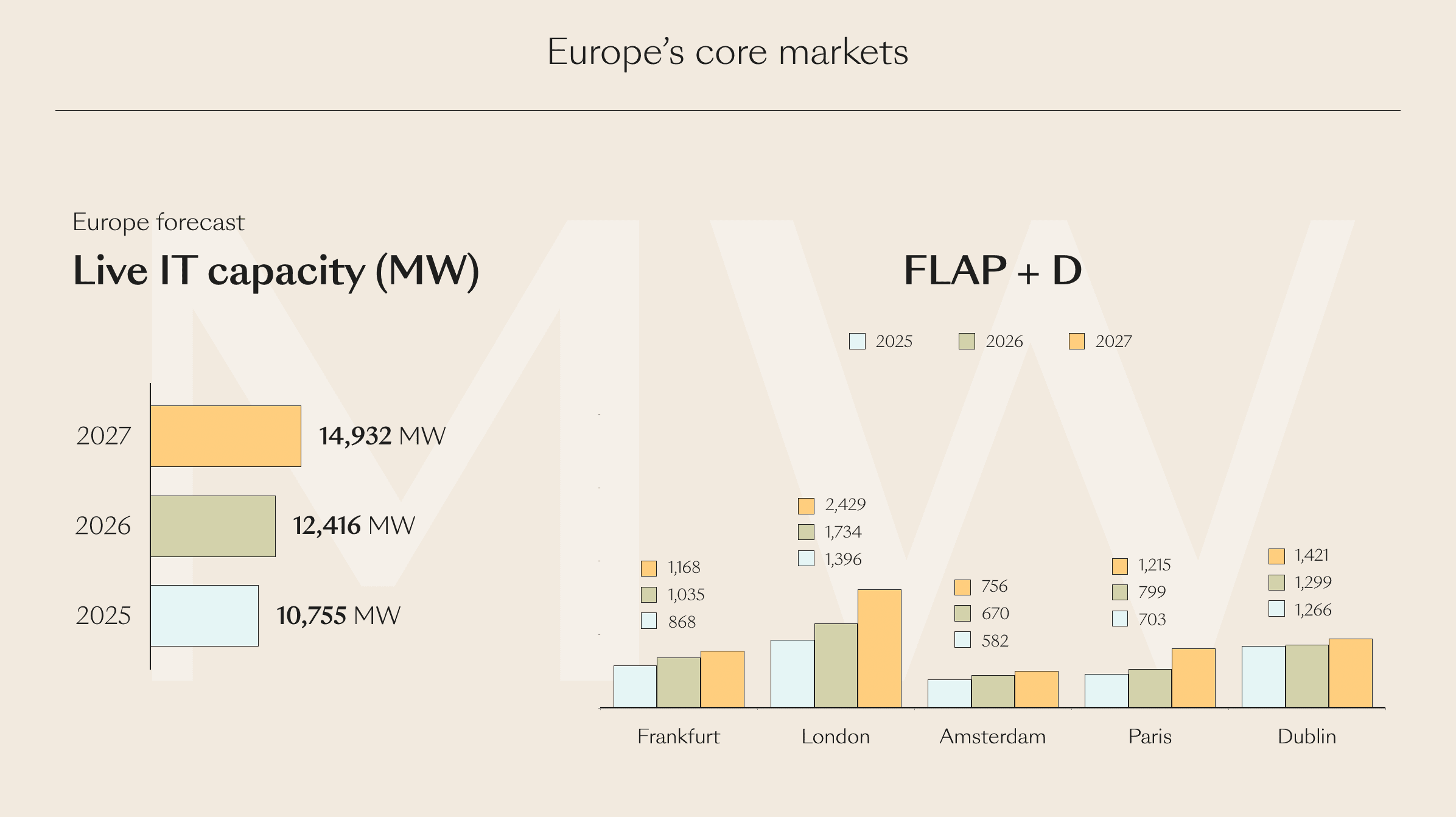
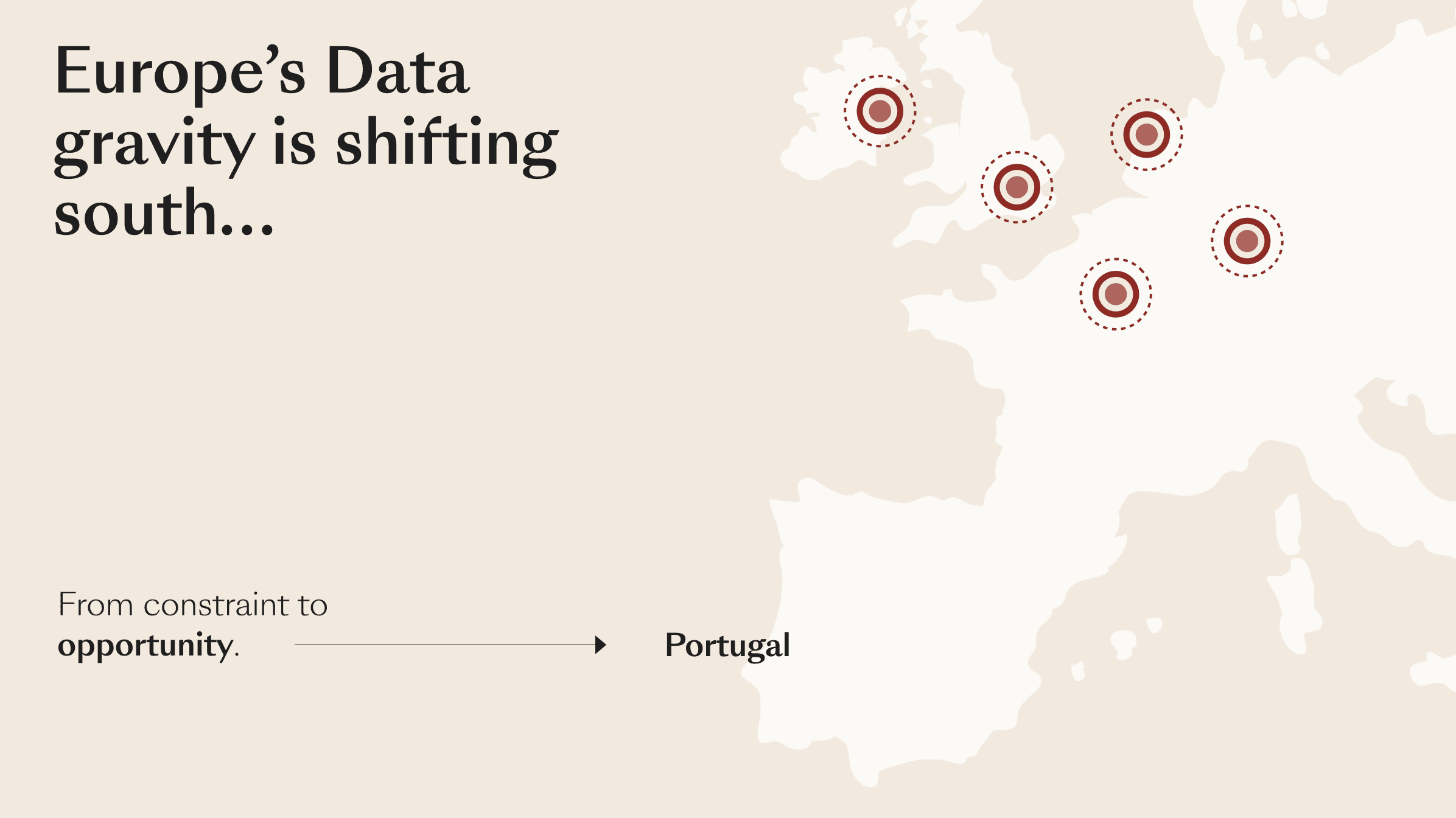
Europe’s traditional data centre hubs – Frankfurt, London, Amsterdam, Paris, and Dublin (FLAP-D) – have long dominated the market due to their connectivity, mature ecosystems, and proximity to financial markets. However, these regions are now facing significant capacity constraints, including power shortages, inventory crises, and long grid connection queues. As demand continues to outpace supply, operators are seeking alternative locations, and Southern Europe is emerging as a viable solution.

Portugal’s competitive edge
Portugal’s rise as a data centre hub is no coincidence. The country offers several advantages that make it an attractive destination for digital infrastructure investments.
Strategic location and connectivity
Portugal serves as a gateway between Europe, the Americas, and Africa, making it a critical node in global connectivity. With 17 submarine cables moored in its waters and 5+ new cables announced, including Google’s Nuvem cable, Portugal is becoming a world leader in the submarine cable network. Its ultra-low latency ensures seamless connections across continents, further solidifying its position as a global connectivity hub.
Energy availability and sustainability
Portugal boasts one of the most renewable electricity systems in Europe, with 76% of its energy mix coming from renewable sources. The country offers competitive long-term energy sourcing options and aligns with hyperscaler ESG objectives. Additionally, Portugal’s commitment to energy transition and access to competitive Power Purchase Agreement (PPA) pricing make it an ideal location for energy-intensive infrastructure like data centres.
Stable regulatory environment
Portugal’s EU-aligned legal and regulatory framework provides a predictable investment environment. The introduction of the ZGP (Zona de Grande Procura) framework, which prioritises projects based on maturity and manages grid pressure, ensures a structured approach to infrastructure development. This regulatory discipline is attracting institutional capital and fostering long-term infrastructure security.
Economic impact and investment opportunities
Portugal’s data centre market is experiencing rapid growth, with significant investments from hyperscalers and international operators. Microsoft, for instance, is investing €8.6 billion in an AI data hub, while a large-scale hyperscale campus in Sines is set to offer up to 1.2 GW capacity with a multi-billion euro investment.
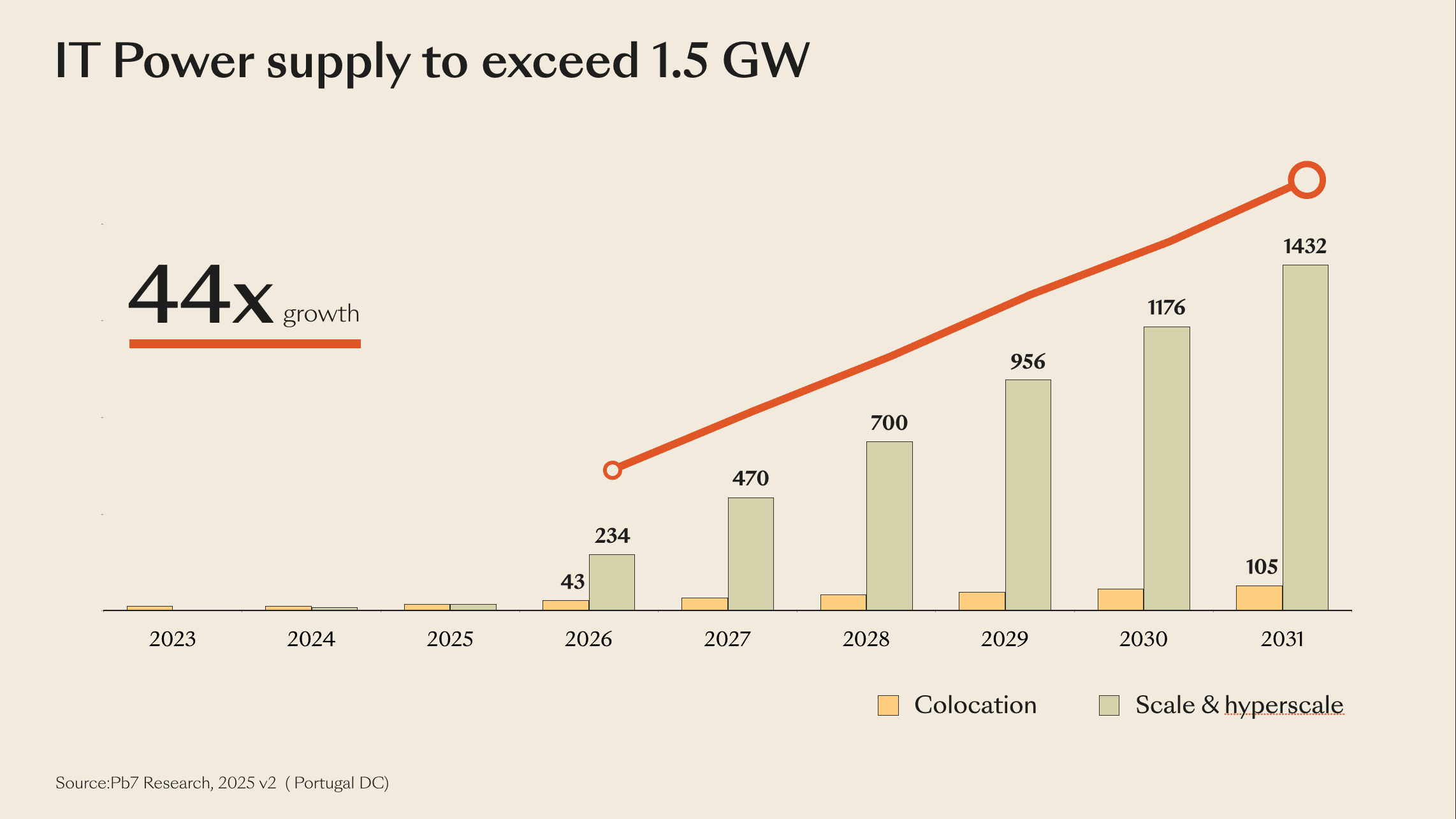
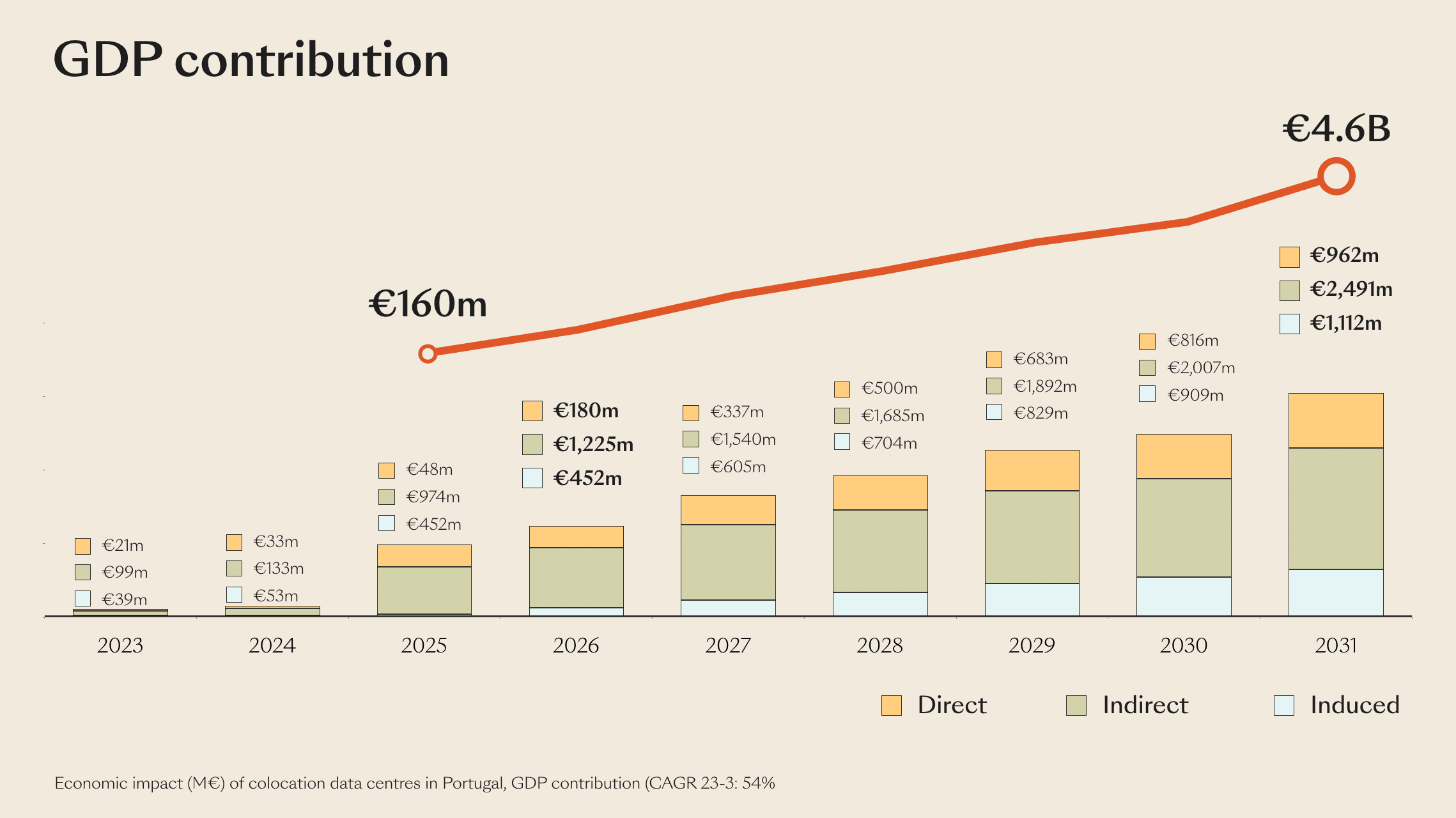
The country’s IT power supply is projected to grow 44 times by 2031, from 43 MW in 2023 to 1,432 MW. This growth is expected to contribute €4.6 billion to Portugal’s GDP by 2031, with a compound annual growth rate (CAGR) of 54%. Lisbon remains the dominant hub, accounting for over 60% of the market, while secondary hubs like Setúbal, Braga, and Porto are gaining momentum.
The shift to Southern Europe
As FLAP-D markets face increasing power shortages and inventory crises, Southern Europe is becoming a focal point for data centre development. Portugal’s available power, shorter permit cycles, and geographic diversification make it an attractive alternative. Developers are now prioritising energy access over land availability, reshaping the development strategy for data centres across Europe.

Conclusion
Portugal’s strategic location, renewable energy resources, and stable regulatory environment have positioned it as a key player in the global data centre market. With growing interest from hyperscalers and international operators, the country is set to lead Southern Europe’s next infrastructure cycle. As Europe faces capacity constraints in its traditional data centre hubs, Portugal is transforming these challenges into opportunities, solidifying its status as a rising star in the digital economy.
In recent years, Portugal has emerged as a key player in the global data centre market, positioning itself as Southern Europe’s next major hub for digital infrastructure. With its strategic location, robust connectivity, and commitment to renewable energy, the country is attracting significant investment from hyperscalers and international operators. Here’s why Portugal is gaining attention and how it is poised to lead Europe’s next infrastructure cycle.
The growing demand for Data Centres
The digital economy is expanding at an unprecedented rate, driven by the rise of cloud computing, artificial intelligence (AI), and the digitalisation of economies. These factors have led to explosive data growth, making data centres critical infrastructure for storing, processing, and moving data.
Europe’s traditional data centre hubs – Frankfurt, London, Amsterdam, Paris, and Dublin (FLAP-D) – have long dominated the market due to their connectivity, mature ecosystems, and proximity to financial markets. However, these regions are now facing significant capacity constraints, including power shortages, inventory crises, and long grid connection queues. As demand continues to outpace supply, operators are seeking alternative locations, and Southern Europe is emerging as a viable solution.
Portugal’s competitive edge
Portugal’s rise as a data centre hub is no coincidence. The country offers several advantages that make it an attractive destination for digital infrastructure investments.
Strategic location and connectivity
Portugal serves as a gateway between Europe, the Americas, and Africa, making it a critical node in global connectivity. With 17 submarine cables moored in its waters and 5+ new cables announced, including Google’s Nuvem cable, Portugal is becoming a world leader in the submarine cable network. Its ultra-low latency ensures seamless connections across continents, further solidifying its position as a global connectivity hub.
Energy availability and sustainability
Portugal boasts one of the most renewable electricity systems in Europe, with 76% of its energy mix coming from renewable sources. The country offers competitive long-term energy sourcing options and aligns with hyperscaler ESG objectives. Additionally, Portugal’s commitment to energy transition and access to competitive Power Purchase Agreement (PPA) pricing make it an ideal location for energy-intensive infrastructure like data centres.
Stable regulatory environment
Portugal’s EU-aligned legal and regulatory framework provides a predictable investment environment. The introduction of the ZGP (Zona de Grande Procura) framework, which prioritises projects based on maturity and manages grid pressure, ensures a structured approach to infrastructure development. This regulatory discipline is attracting institutional capital and fostering long-term infrastructure security.
Economic impact and investment opportunities
Portugal’s data centre market is experiencing rapid growth, with significant investments from hyperscalers and international operators. Microsoft, for instance, is investing €8.6 billion in an AI data hub, while a large-scale hyperscale campus in Sines is set to offer up to 1.2 GW capacity with a multi-billion euro investment.
The country’s IT power supply is projected to grow 44 times by 2031, from 43 MW in 2023 to 1,432 MW. This growth is expected to contribute €4.6 billion to Portugal’s GDP by 2031, with a compound annual growth rate (CAGR) of 54%. Lisbon remains the dominant hub, accounting for over 60% of the market, while secondary hubs like Setúbal, Braga, and Porto are gaining momentum.
The shift to Southern Europe
As FLAP-D markets face increasing power shortages and inventory crises, Southern Europe is becoming a focal point for data centre development. Portugal’s available power, shorter permit cycles, and geographic diversification make it an attractive alternative. Developers are now prioritising energy access over land availability, reshaping the development strategy for data centres across Europe.
Conclusion
Portugal’s strategic location, renewable energy resources, and stable regulatory environment have positioned it as a key player in the global data centre market. With growing interest from hyperscalers and international operators, the country is set to lead Southern Europe’s next infrastructure cycle. As Europe faces capacity constraints in its traditional data centre hubs, Portugal is transforming these challenges into opportunities, solidifying its status as a rising star in the digital economy.
More to read





Let's talk
Get in touch with us.
Get in touch with us.
Let's talk
Get in touch with us.
Get in touch with us.