
Inside Portugal’s high-yield commercial property market
Inside Portugal’s high-yield commercial property market
by
David Moura-George (Webinar)
15
min read
Recovery with structural depth
Portugal’s commercial property market is no longer just “recovering” – it is repositioning itself on stronger, more diversified foundations.
After bottoming out at €1.6 billion in 2023, investment volumes rebounded to €2.8 billion in 2025, representing a +21% year-on-year increase. This is not a short-term bounce. It reflects a market regaining liquidity and, more importantly, investor conviction.
What’s changed structurally is where capital is flowing. Around 50% of investment is now directed to regions outside Lisbon, particularly in the North. This signals a shift away from a single-core market to a more distributed investment landscape — reducing concentration risk and opening new value pockets.
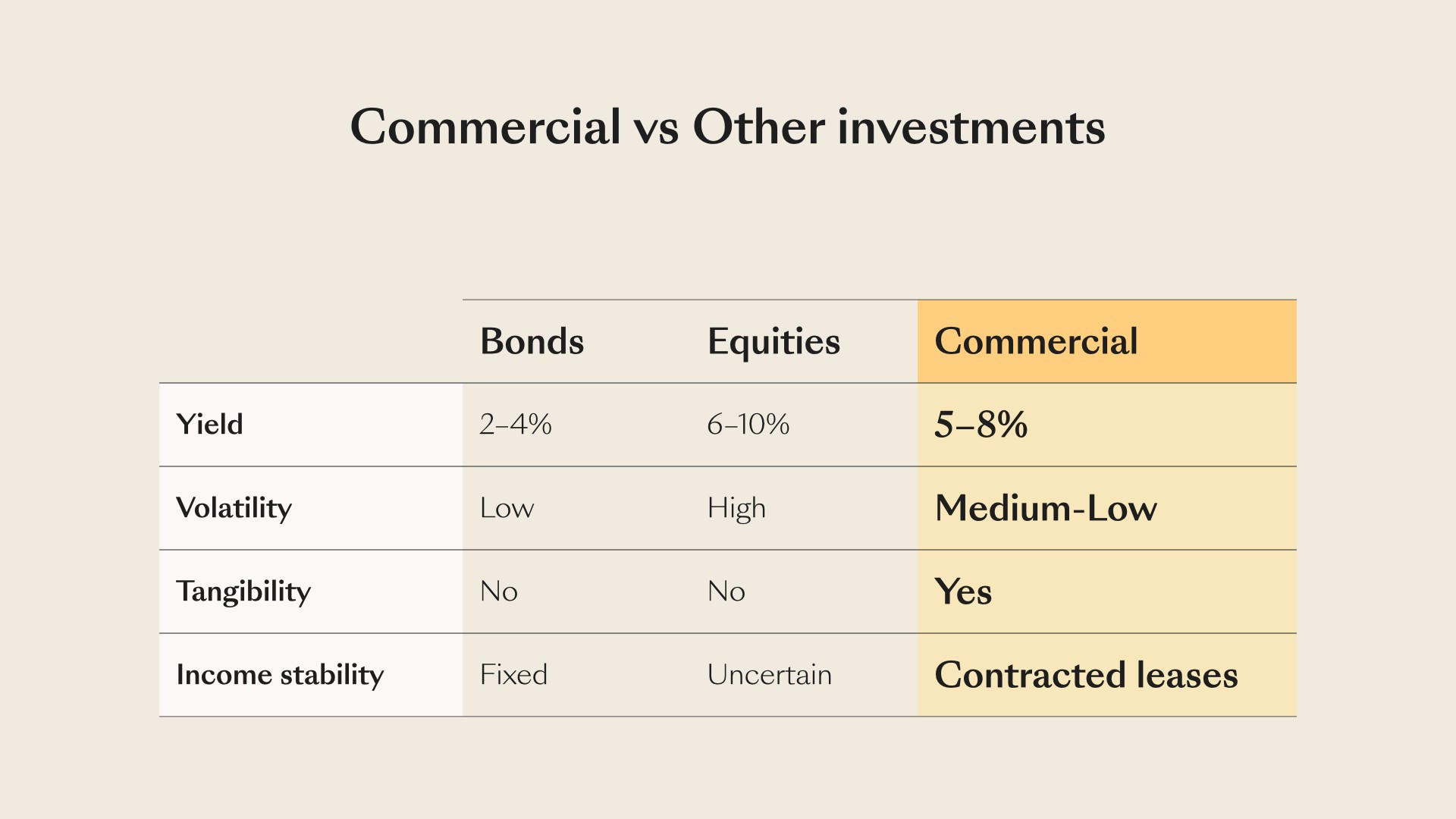
Deal flow has normalised across the year, indicating a healthier, less opportunistic market cycle.
This recovery is underpinned by fundamentals that investors actually price in:
GDP growth of ~2.3% in 2026
Inflation stabilising around 2%
Unemployment at a low 6.2%
Sustained tourism demand
Overlay that with investment-grade ratings from Fitch Ratings, S&P Global Ratings and Moody's Investors Service, all with stable outlooks, and you get the real driver: risk compression.
This is why investor confidence is rising – not because of hype, but because the downside is increasingly protected.
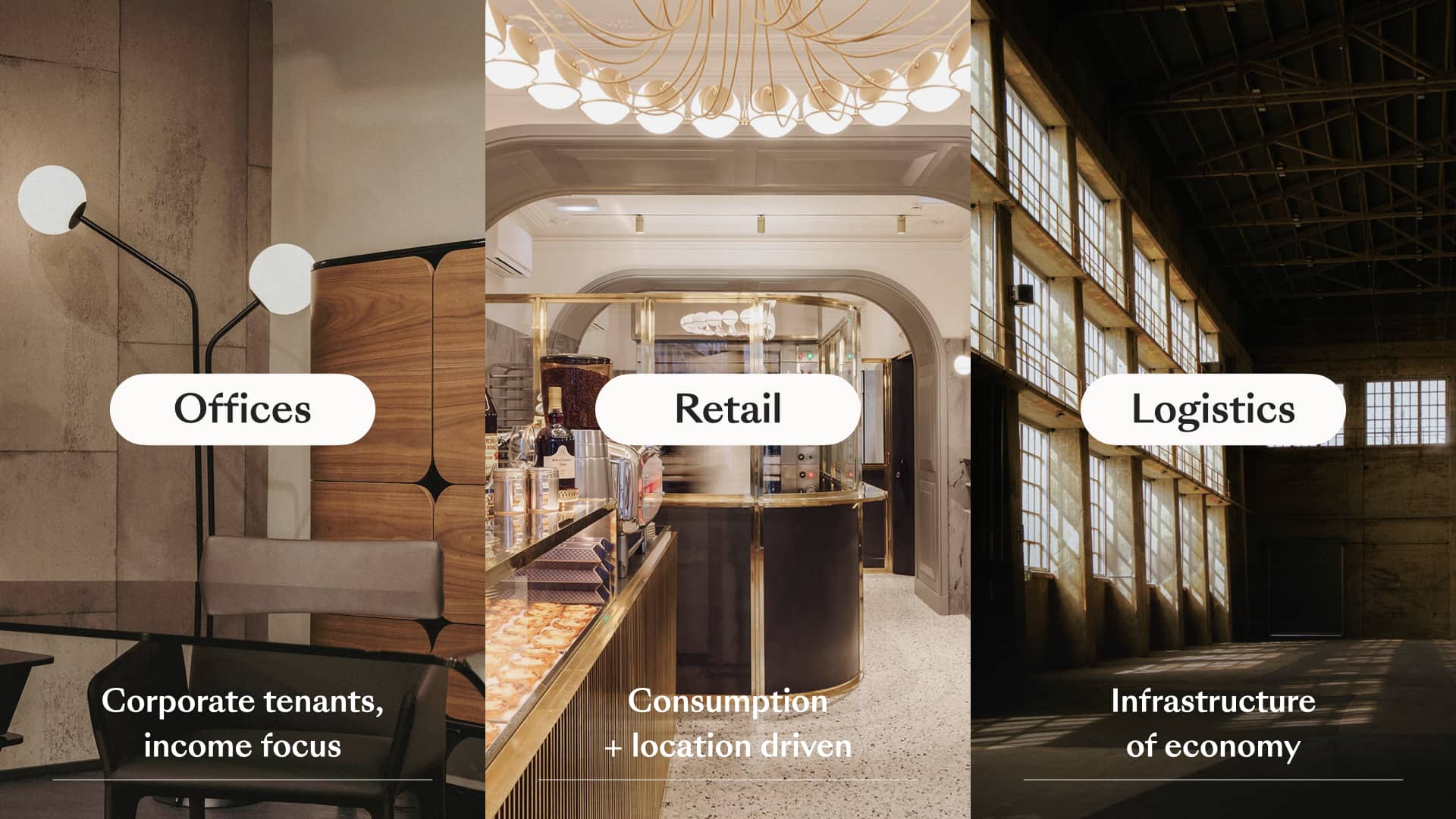
Office market
– Supply constraints driving rental growth
The office market tells a more nuanced story – and this is where many investors misread the signals.
In Lisbon, office take-up reached 204,200 sqm in 2025, down 8% year-on-year. On the surface, that looks like weakening demand. It isn’t.
The key dynamic is lack of high-quality supply, particularly in central business districts. This is precisely why prime rents increased to €30/sqm in Q4 – tenants are competing for a limited pool of grade-A assets.
Demand remains structurally strong:
Financial services account for 23% of take-up
169 deals completed, with an average size of 1,210 sqm
What’s coming next matters more. Around 290,000 sqm of office space is under construction, largely in CBD locations, with delivery expected between 2026 and 2028. This will partially relieve supply pressure – but timing is critical. Until then, rental growth is likely to remain supported.
Add to this a return-to-office rate of 28% (above the EU average), and you get a clear conclusion: occupier demand is not disappearing – it’s consolidating into better assets.
Retail Market
– Consumption resilience backed by tourism
Retail is often treated as a lagging sector. In Portugal, it’s behaving differently.
In 2025:
Retail sales increased by 4.8%
E-commerce grew by 6.1%
Physical retail still rose by 4.7%
That last figure is critical – it shows physical retail is not being cannibalised, but rather supported by tourism and rising domestic consumption.
Household spending increased by 3.5%, driven by:
Strong employment levels
Continued inflow of international visitors
Expansion from major operators such as Mercadona and Continente, particularly in food & beverage, reinforces a key trend: retail is shifting toward experience-led and necessity-based formats.
For investors, this matters because it anchors tenant demand and stabilises income streams, especially in prime urban and high-footfall locations.
Industrial and logistics
– Scaling to meet structural demand
Logistics remains one of the most structurally driven segments – but the growth is becoming more disciplined.
In 2025:
Take-up reached 485,000 sqm
100,000 sqm was delivered
450,000 sqm is currently under construction, much of it BREEAM-certified
Demand is concentrated among:
3PL operators (46%)
Energy and utilities (10%)
While take-up has fluctuated from 604,000 sqm in 2021 to 485,000 sqm in 2025, this is not volatility – it’s normalisation after a post-pandemic surge.
The key shift is towards higher-quality, ESG-compliant assets, which are becoming the standard for institutional capital. This is where pricing power will sit going forward.
Recovery with structural depth
Portugal’s commercial property market is no longer just “recovering” – it is repositioning itself on stronger, more diversified foundations.
After bottoming out at €1.6 billion in 2023, investment volumes rebounded to €2.8 billion in 2025, representing a +21% year-on-year increase. This is not a short-term bounce. It reflects a market regaining liquidity and, more importantly, investor conviction.
What’s changed structurally is where capital is flowing. Around 50% of investment is now directed to regions outside Lisbon, particularly in the North. This signals a shift away from a single-core market to a more distributed investment landscape — reducing concentration risk and opening new value pockets.
Deal flow has normalised across the year, indicating a healthier, less opportunistic market cycle.
This recovery is underpinned by fundamentals that investors actually price in:
GDP growth of ~2.3% in 2026
Inflation stabilising around 2%
Unemployment at a low 6.2%
Sustained tourism demand
Overlay that with investment-grade ratings from Fitch Ratings, S&P Global Ratings and Moody's Investors Service, all with stable outlooks, and you get the real driver: risk compression.
This is why investor confidence is rising – not because of hype, but because the downside is increasingly protected.
Office market
– Supply constraints driving rental growth
The office market tells a more nuanced story – and this is where many investors misread the signals.
In Lisbon, office take-up reached 204,200 sqm in 2025, down 8% year-on-year. On the surface, that looks like weakening demand. It isn’t.
The key dynamic is lack of high-quality supply, particularly in central business districts. This is precisely why prime rents increased to €30/sqm in Q4 – tenants are competing for a limited pool of grade-A assets.
Demand remains structurally strong:
Financial services account for 23% of take-up
169 deals completed, with an average size of 1,210 sqm
What’s coming next matters more. Around 290,000 sqm of office space is under construction, largely in CBD locations, with delivery expected between 2026 and 2028. This will partially relieve supply pressure – but timing is critical. Until then, rental growth is likely to remain supported.
Add to this a return-to-office rate of 28% (above the EU average), and you get a clear conclusion: occupier demand is not disappearing – it’s consolidating into better assets.
Retail Market
– Consumption resilience backed by tourism
Retail is often treated as a lagging sector. In Portugal, it’s behaving differently.
In 2025:
Retail sales increased by 4.8%
E-commerce grew by 6.1%
Physical retail still rose by 4.7%
That last figure is critical – it shows physical retail is not being cannibalised, but rather supported by tourism and rising domestic consumption.
Household spending increased by 3.5%, driven by:
Strong employment levels
Continued inflow of international visitors
Expansion from major operators such as Mercadona and Continente, particularly in food & beverage, reinforces a key trend: retail is shifting toward experience-led and necessity-based formats.
For investors, this matters because it anchors tenant demand and stabilises income streams, especially in prime urban and high-footfall locations.
Industrial and logistics
– Scaling to meet structural demand
Logistics remains one of the most structurally driven segments – but the growth is becoming more disciplined.
In 2025:
Take-up reached 485,000 sqm
100,000 sqm was delivered
450,000 sqm is currently under construction, much of it BREEAM-certified
Demand is concentrated among:
3PL operators (46%)
Energy and utilities (10%)
While take-up has fluctuated from 604,000 sqm in 2021 to 485,000 sqm in 2025, this is not volatility – it’s normalisation after a post-pandemic surge.
The key shift is towards higher-quality, ESG-compliant assets, which are becoming the standard for institutional capital. This is where pricing power will sit going forward.
More to read




Let's talk
Get in touch with us.
Get in touch with us.
Let's talk
Get in touch with us.
Get in touch with us.